
Lower back pain exercises to avoid and effective alternatives in Melbourne
If you’ve been searching for ways to relieve lower back pain, best stretches for lower back, lower back exercises, or how to get rid of a sore back quickly, you’ve probably been told to stretch more. Do cat-cow, child’s pose, crunches, or strengthen your core. Yet, despite all this, your lower back pain keeps returning.

The reality is uncomfortable: many common lower back exercises can actually make your pain worse.
Understanding lower back pain
The lower back isn’t designed to create large movements. Its main job is to transfer force efficiently. When your hips don’t rotate properly, your pelvis lacks stability, or your thoracic spine is stiff, the lumbar spine has to compensate. That’s when you feel tightness, spasms, or discomfort. Lower back pain is rarely random, it’s usually the result of mechanical overload.
Common mistakes in lower back exercise
Many popular exercises target the lower back in ways that increase risk rather than reduce pain. Stretching an unstable area, repeatedly flexing the spine with crunches or sit-ups, heavy deadlifts, squats without hip rotation, hyperextension machines, high-impact cardio, aggressive hip flexor stretches, ignoring upper back mechanics, vague core bracing, and training muscles in isolation all contribute to recurring pain.
For example, heavy barbell deadlifts or loaded spinal flexion exercises can strain a lower back that lacks pelvic stability. High-volume back extensions or twisting under load may also aggravate symptoms. Even traditional physiotherapy or gym exercises aren’t wrong, they just need to be applied correctly.
What actually helps lower back pain
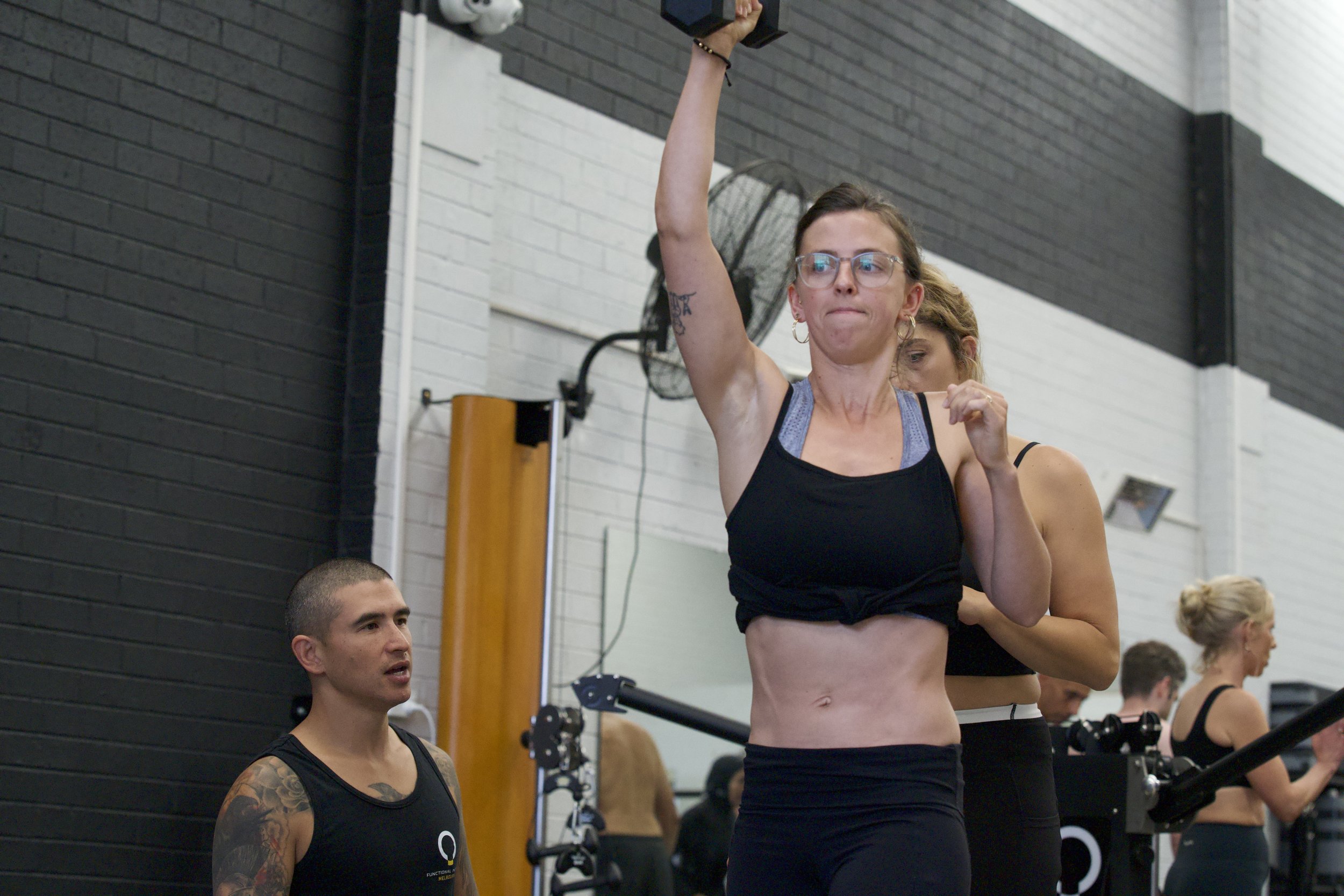
The key to reducing lower back pain isn’t doing more exercises, it’s doing the right ones. Focusing on pelvic stability, true core stability, functional movement patterns, and posture correction makes a significant difference.
Real core stability exercises are about resisting unwanted motion rather than creating more movement. Functional Patterns include rotational control, gait retraining, improving hip internal rotation, and restoring balanced force transfer. Posture correction is not just standing up straight, it involves ribcage positioning, pelvic orientation, and rotational balance.
Walking can also help lower back pain, but only if your gait is efficient. An asymmetrical gait that loads one side more than the other can actually worsen pain.
Lower back pain treatment in Melbourne
At Functional Patterns Melbourne, we take a different approach. Rather than prescribing generic back exercises, we assess your posture, pelvic stability, rotational sequencing, and gait mechanics. Lower back pain is rarely just a lower back problem, it’s often a system-wide load distribution issue.
If your back pain keeps returning despite stretching, physio exercises, or gym workouts, it’s time to focus on the system rather than isolated exercises. Book a posture and gait assessment today to get to the root of your pain and move better, pain-free.