
Hunchback Posture: Causes, Symptoms, and How to Fix It for Long-Term Relief
Hunchback posture—often described as a hunched or rounded upper back—is more than a cosmetic concern. Over time, it can change how your body distributes force, how you breathe, and how efficiently you move. For many people, it becomes a persistent source of back pain that no amount of temporary relief seems to fix.
Understanding why hunchback posture develops—and why most solutions fail—is the first step toward building a stronger, more resilient structure that lasts.
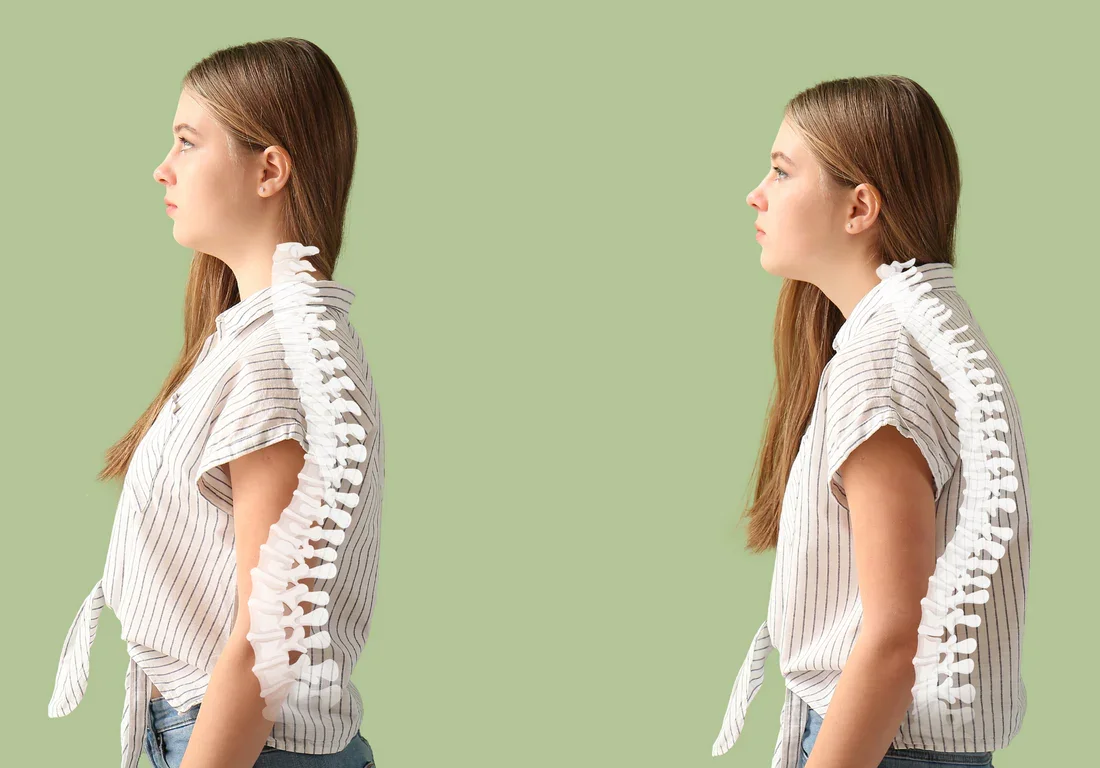
What Is Hunchback Posture?
Hunchback posture, clinically associated with thoracic kyphosis, occurs when the upper spine rounds forward beyond its optimal alignment. This rounding is often accompanied by forward head posture, internally rotated shoulders, and a ribcage that sits in a compressed position.
Rather than being an isolated upper-back issue, hunchback posture reflects how the entire body organizes itself around gravity and movement. When this organization breaks down, compensation becomes the norm.
Common Causes of Hunchback Posture
Hunchback posture rarely appears overnight. It develops gradually as the body adapts to repeated stress and inefficient movement patterns.
Common contributors include:
Prolonged sitting and screen use
Repetitive daily habits that limit spinal motion
Poor force transfer between the lower body, trunk, and upper body
Training approaches that isolate muscles instead of improving coordination
A ribcage and pelvis that no longer stack effectively over one another
Over time, these factors teach the nervous system to default to positions that feel stable but ultimately create dysfunction.

Signs and Symptoms of a Hunched Posture
While rounded shoulders are the most visible sign, the effects of hunchback posture often extend well beyond appearance.
Many people experience:
Chronic upper or mid-back pain
Neck stiffness or tension headaches
Shoulder discomfort or reduced overhead mobility
Shallow breathing and reduced endurance
A general feeling of weakness or fatigue during movement
These symptoms persist because the structure itself is not functioning efficiently.
Why Most Posture Fixes Don’t Last
Many posture correction strategies focus on quick fixes—stretching tight areas, strengthening weak muscles, or cueing someone to “stand up straight.” While these methods may provide temporary relief, they often fail to address the root problem.
Posture is not a position you hold.
It is the result of how your body manages load, motion, and force.
Without restoring proper sequencing, timing, and integration across the entire system, the body eventually returns to its old defaults.
Can Hunchback Posture Be Reversed?
In many cases, yes—but only when approached correctly.

Lasting change requires:
Reorganizing how the body stacks itself against gravity
Restoring efficient relationships between the spine, ribcage, and pelvis
Improving how force travels from the ground, through the core, and into the upper body
Teaching the nervous system new movement solutions it can rely on under real-world stress
This is where most conventional approaches fall short.
Why Functional Patterns Offers a Long-Term Solution
Functional Patterns stands apart because it does not chase symptoms or isolated muscles. Instead, it focuses on rebuilding the body as an integrated system.
By addressing posture through gait, spinal mechanics, and global movement efficiency, Functional Patterns helps individuals:
Reduce chronic back pain at its source
Build a structure that supports itself naturally
Improve resilience under load and fatigue
Create posture that holds without conscious effort
Rather than forcing the body into alignment, Functional Patterns restores the conditions that allow alignment to emerge organically.
Building a Stronger Structure, Not Just Better Posture

True posture correction is about durability. When the body moves efficiently, posture improves as a byproduct—not a goal.
A well-organized structure:
Distributes stress evenly across joints
Reduces unnecessary muscular tension
Supports breathing and spinal motion
Performs better in daily life and athletic tasks
This is why people who address posture through a systemic, movement-based lens often experience relief that lasts years—not weeks.
Final Thoughts
Hunchback posture is not simply a bad habit—it is the body’s response to long-term dysfunction. Fixing it requires more than cues or isolated corrections. It requires rebuilding how the body moves, loads, and supports itself.
For those seeking lasting back pain relief and a stronger, more capable structure, Functional Patterns offers an approach rooted in biomechanics, integration, and long-term resilience.
Posture isn’t something you force. It’s something you earn through better movement.
Ready to finally fix your posture for good?
Discover how Functional Patterns can help you relieve back pain, restore your structure, and move stronger every day. Learn more about our system and start your journey to lasting posture transformation today.