
Functional Patterns Group Classes vs Traditional Gym Classes (What Makes Them Different?)
Most group fitness classes are built around one goal: getting you tired.
And look, there’s nothing wrong with sweating, breathing hard, and leaving a session feeling like you worked. The problem is that a lot of traditional gym classes are designed to deliver intensity first, without much consideration for what that intensity is doing to your body over time.
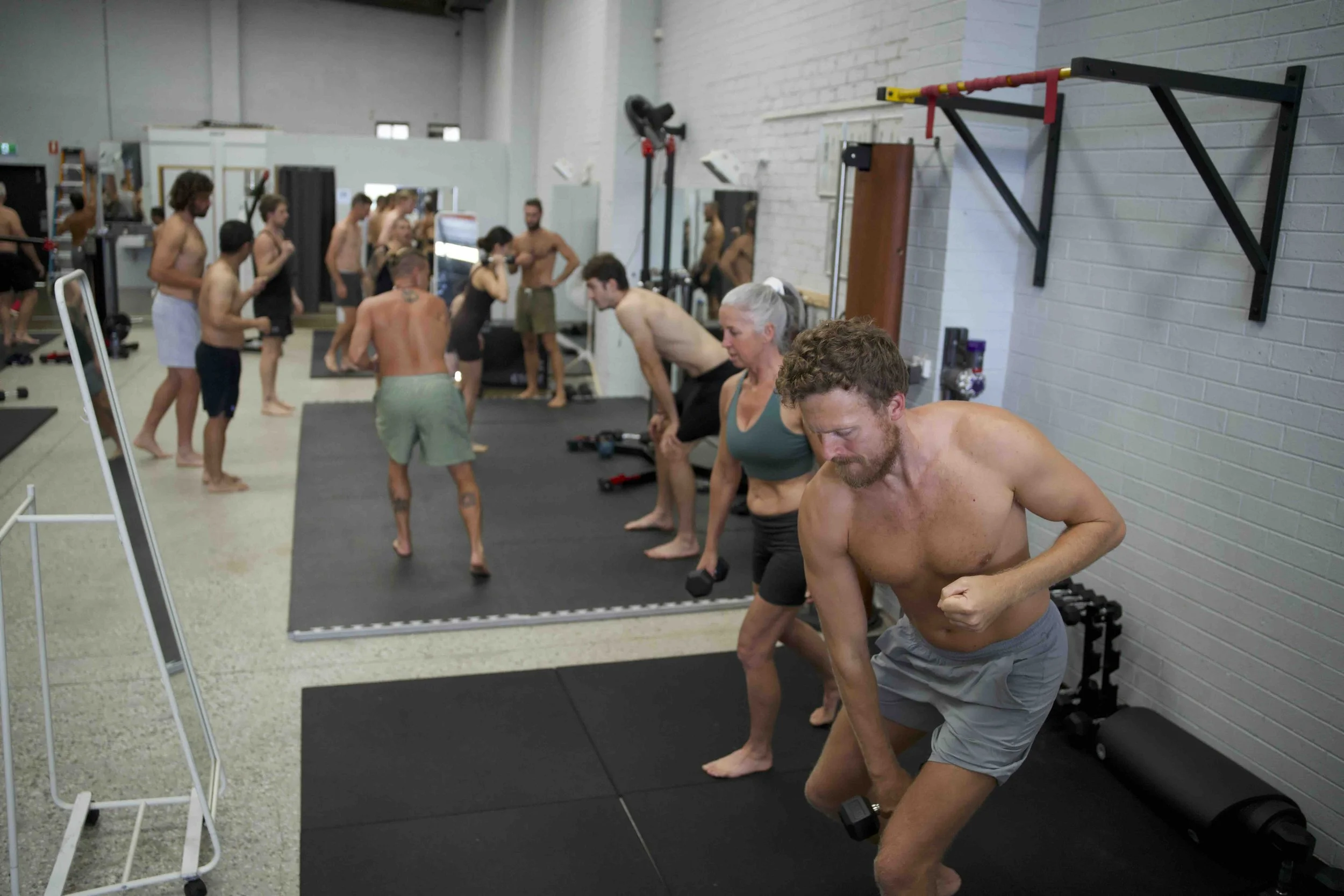
That’s why so many people end up stuck in the same loop. They train consistently, they “feel the burn,” they even get fitter in some ways, but they still deal with the same tightness, aches, recurring flare ups, or movement limitations. Lower back pain that keeps coming back. Knees that always feel irritated after leg days. Hips that feel locked up. Shoulders that don’t move freely overhead.
At Functional Patterns Melbourne, our approach to group training is different. A group fitness class Functional Patterns style isn’t just a workout you survive. It’s training that improves how you move, so your body actually holds up better in real life.
Because in our world, exercise isn’t just about doing more. It’s about doing what makes you better.
Understanding Functional Patterns (And Why It’s Not Just Another “Style” of Training)
Functional Patterns is built on a simple but powerful idea: movement is medicine.
But there’s a catch. Medicine needs the right dose, the right timing, and the right application. And exercise is the same. Just because something is hard doesn’t mean it’s helpful. Just because you’re sweating doesn’t mean you’re improving the way your body functions.
Functional Patterns is a biomechanics-based training system that focuses on improving the fundamentals of human movement. Instead of isolating muscles for the sake of it, we look at how your body is designed to work as a whole.
That’s why you’ll hear us talk about the “First 4” movement patterns: standing, walking, running, and throwing. These aren’t random concepts or fancy fitness buzzwords. They’re the foundation of how humans interact with the world. When those patterns are functioning well, people tend to move with more efficiency, feel more stable, and experience less wear and tear.
And when those patterns aren’t functioning well, people usually compensate. They find workarounds. They push through. They repeatedly load joints that aren’t designed to withstand that load. Eventually, it shows up as pain, stiffness, or injury.
That’s where Functional Patterns stands apart from traditional training. It’s not about smashing yourself with random exercises. It’s about creating a body that’s organised, capable, and resilient.
Why Functional Patterns Group Classes Feel Different to Traditional Gym Classes
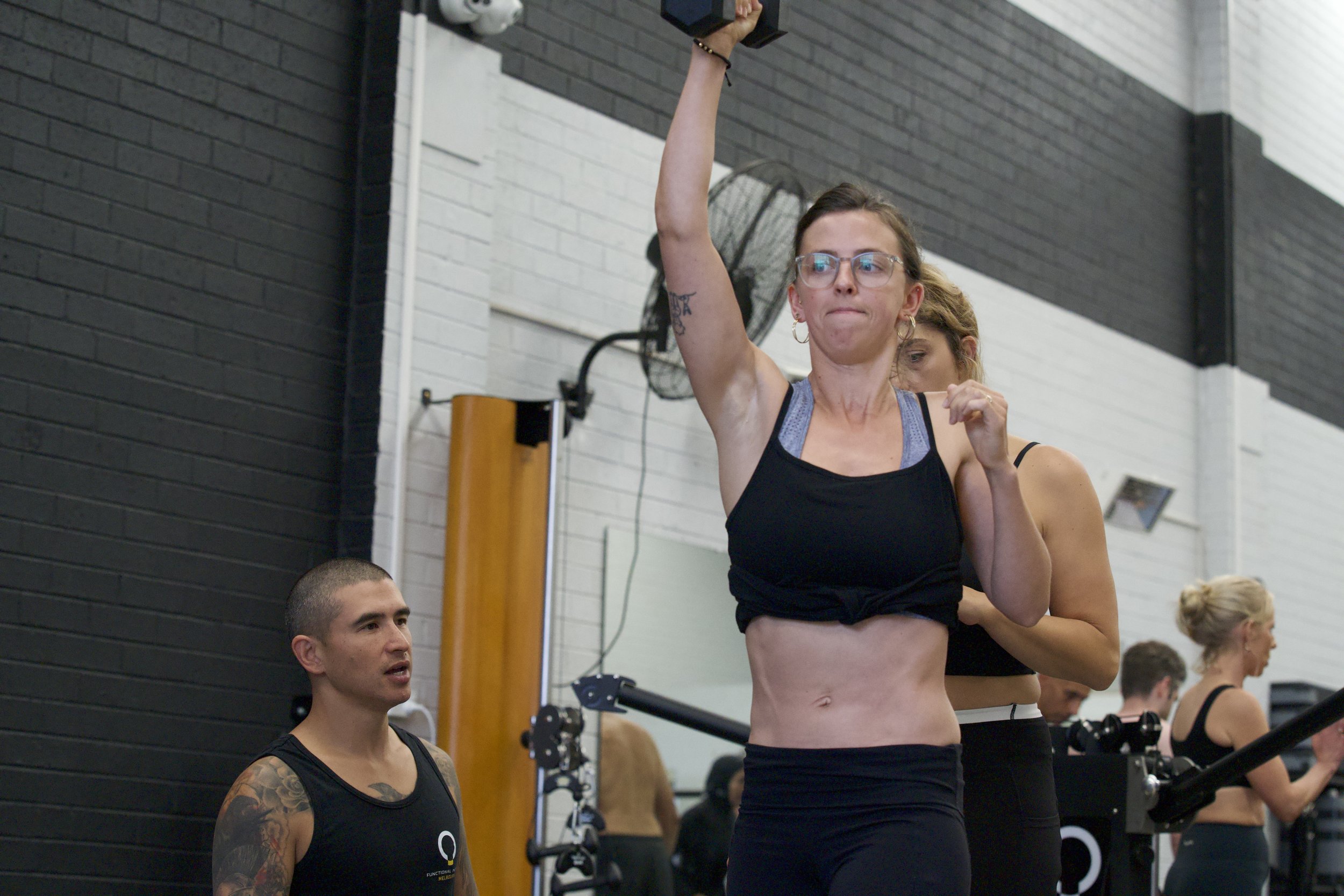
When most people think of “group training,” they picture fast-paced circuits, high rep workouts, and exercises that are chosen because they look tough or feel intense. Often, there’s minimal coaching because one trainer is trying to manage a big room, and the class becomes more about surviving the session than actually improving anything.
Functional Patterns group classes don’t work like that.
Yes, you’ll still train. You’ll still get stronger. You’ll still be challenged. But the difference is that the training is structured around movement quality and progression, not chaos.
Instead of throwing exercises together for variety, we build sessions around movement optimisation. That means we’re always working toward better posture, better mechanics, and better force transfer through the body. When you improve those things, you don’t just feel fitter in the gym; you start noticing changes in everyday life.
Walking feels smoother. You feel more stable on one leg. Your hips feel less restricted. Your back stops tightening up after sitting. You can train hard without feeling like your joints are slowly being sacrificed for the sake of a workout.
That’s the real value. It’s not short-term fatigue. It’s a long-term change.
The Real Benefits of Functional Patterns Group Training
Functional Patterns group training is built to improve your capacity while also respecting how the body actually adapts. That’s why people often notice improvements in mobility, strength, coordination, and even pain levels when they stick with it.
We’re not just chasing “fitness” as an outcome. We’re building a body that moves better, and fitness becomes a byproduct of that.
A big part of the process is helping people reduce compensation. Most pain and breakdown don’t come from being “weak” in a generic sense. It comes from repeatedly loading the body in ways that don’t match your structure. That’s why you can have someone who looks strong, but still deals with constant flare-ups.
When movement improves, efficiency improves. When efficiency improves, your body stops wasting energy and stops relying on the same tissues to do everything. And when that happens, training starts to feel productive again instead of punishing.
That’s what people mean when they say Functional Patterns feels like “corrective exercise,” but without being boring or clinical.
It’s training that makes sense.
What You Actually Do in a Functional Patterns Group Fitness Class
A lot of people hear “functional training” and think it means unstable exercises, random balance drills, or light movements that never get challenging. That’s not what we do.
In our group classes, you’ll still work hard. But the session is organised so that each piece supports the next, and everything has a purpose.
You’ll see mobility exercises, but not the kind that are just stretching for the sake of it. Mobility is used to help you access better positions and improve the way your body moves through space. When your ribcage, pelvis, hips, and feet start working together properly, you don’t need to force flexibility. You start to earn it through better mechanics.
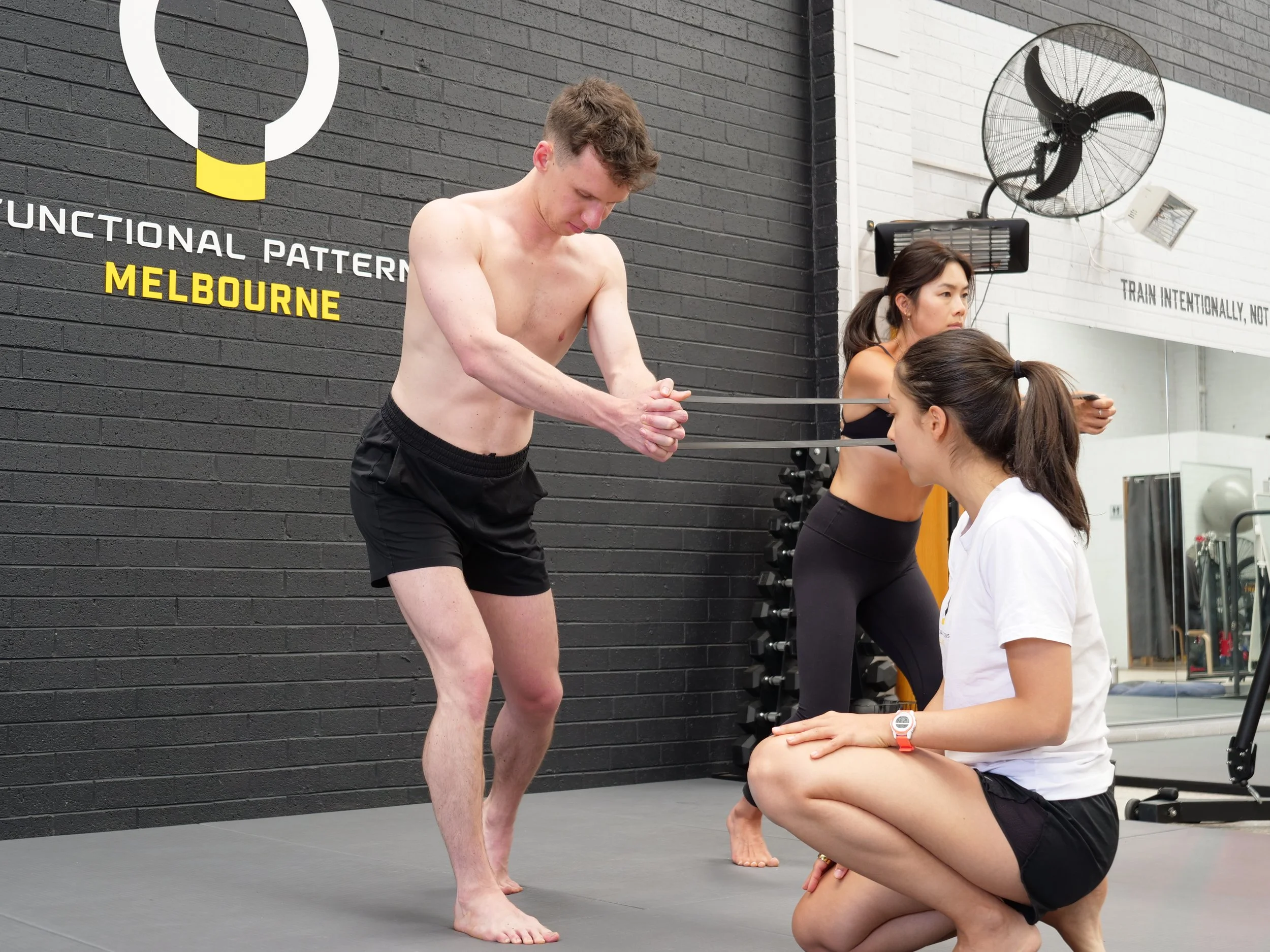
You’ll also see resistance band workouts, because bands are an incredible tool for building integrated strength and control. They allow us to train coordination, rotation, and posture in a way that carries over to real movement patterns. The goal isn’t to isolate one muscle and pump it up. The goal is to teach your body how to connect and transfer force.
And yes, there is balance training, but not in a gimmicky way. Balance improves when your alignment improves, when your weight shift improves, and when your gait mechanics improve. In Functional Patterns, balance isn’t just a party trick. It’s a sign that your body is organised.
Over time, this becomes a different type of strength and conditioning. Not just “how much can you lift,” but how well you can move under load, how efficiently you can produce force, and how resilient your body is when you’re tired.
That’s what makes it sustainable.
Why Our Group Exercise Routines Actually Progress You
One of the biggest issues with traditional group fitness is that it’s often random. You might do completely different workouts every week, which feels fun, but doesn’t always lead to real progression. People get better at suffering, but they don’t necessarily get better at moving.
Functional Patterns is built on progressions.
That means we’re not just throwing you into the deep end. We’re building the foundations first, then layering complexity and intensity on top of it. This is why our group classes work for beginners and experienced athletes alike.
If you’re new, you get a clear pathway. If you’re advanced, you still get challenged because the work becomes more demanding as your movement improves.
And because the training is based on biomechanics, it’s not just “more reps” or “heavier weights” for the sake of it. It’s progressing your ability to move well, and then loading that ability.
That’s the difference between training that breaks you down and training that builds you up.
The Community Side: Getting Coached While Training With Others
The community aspect is a huge reason group training works. People show up more consistently when they feel connected to something. When you know others are training too, it’s easier to stay accountable. It becomes part of your week, not something you constantly debate in your head.
But the best part is that you don’t lose coaching.
A lot of group classes become “follow along and hope you’re doing it right.” In Functional Patterns group classes, coaching and cueing still matter. The goal is that you actually learn something about your body every session. You start to understand how to position yourself better, how to generate force more efficiently, and how to avoid defaulting into compensations.
You’re not just exercising. You’re developing a skill. And skill is what makes movement sustainable.
Final Thoughts: The Future of Group Fitness Isn’t Harder, It’s Smarter
Group fitness isn’t going anywhere. People love training together, and they should. Community is powerful.
But the future of group training isn’t just louder music, harder circuits, and more fatigue.
It’s smarter programming. Better progressions. More focus on movement quality. More emphasis on biomechanics and long-term outcomes.
If you’ve been looking for a group fitness class in the Functional Patterns style because you want to build strength, improve mobility, reduce pain, and train in a way that actually carries over to real life, then you’re in the right place.
At Functional Patterns Melbourne, our group classes are built for people who want more than just a workout. They’re built for people who want a body that works.
Ready to Join a Functional Patterns Group Class in Melbourne?
If you want the best results, we usually recommend starting with a 1:1 consultation, so we can assess how you move and help you get the most out of group training.
From there, you can jump into our group classes and build consistency in a supportive environment while still progressing properly.
Book your consultation or join the next group class block here: