
How to Stop Pain Beneath Shoulder Blade
Pain beneath your shoulder blade can be one of those issues that feels impossible to pin down.
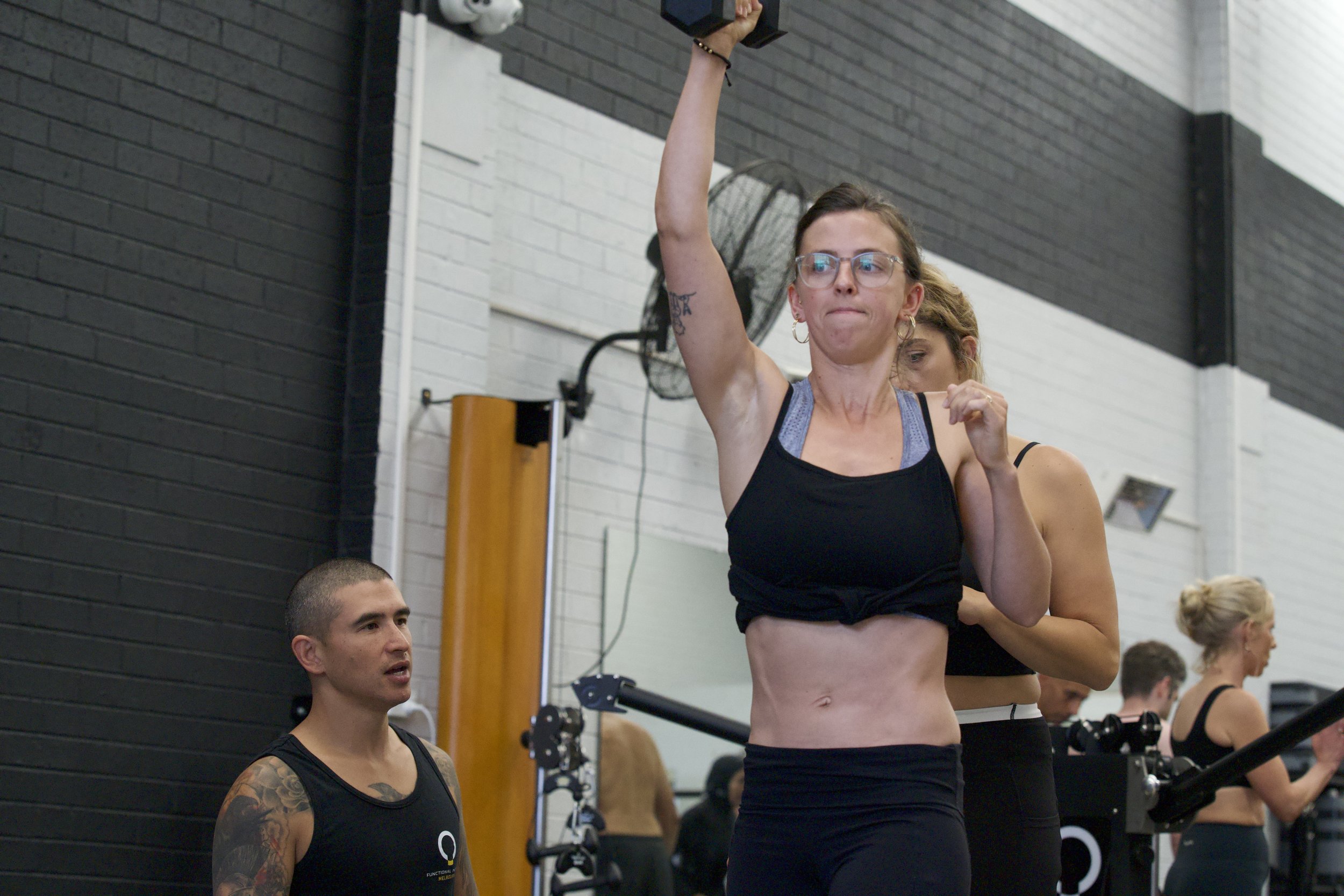
Maybe it’s a deep ache you feel after sitting at a desk. Maybe it flares up during training. Or maybe it’s been hanging around for months, and you’ve tried everything — massage, stretching, posture drills, even “trigger point release” — only for it to come back again.
At Functional Patterns Melbourne, we don’t look at pain under the shoulder blade as a random muscle problem that needs constant treatment. We look at it as a movement and posture problem that often has a clear mechanical reason behind it.
And one of the most common patterns linked to this kind of pain is scapular winging — when the shoulder blade loses its ability to sit and move smoothly on the ribcage.
This article will walk you through:
what pain beneath the shoulder blade actually is (and why it’s so common)
the most likely root causes
how scapular winging and posture dysfunction play a role
what to do if you want long-term relief, not just temporary relief.
Understanding Shoulder Blade Pain
Pain under the shoulder blade can feel “local”, like it’s coming from one spot — but in many cases, the scapula is just the area that’s absorbing stress because other parts of the body aren’t doing their job properly.
That’s why so many people end up in a frustrating cycle:
pain shows up under the scapula
they stretch or massage it
it feels better briefly
the pain returns (often worse)
To break that loop, you need to understand what the scapula is supposed to do.
Anatomy of the Shoulder Blade (Scapula)
The scapula is not a fixed bone. It’s designed to move.
It sits on top of your ribcage and is meant to glide smoothly as you:
reach overhead
pull or push objects
rotate through your torso
walk and run
load your upper body in the gym
The scapula is part of a system that includes:
the ribcage and thoracic spine (upper back)
the shoulder joint
the neck and head position
the pelvis and gait mechanics
breathing mechanics
When this system loses coordination, you can end up with a scapular stability problem — and the body starts compensating in ways that create irritation beneath the shoulder blade.
Common Symptoms of Shoulder Blade Pain
Pain beneath the shoulder blade doesn’t always show up the same way, but common patterns include:
deep ache beneath one shoulder blade
tightness between the shoulder blades and spine
burning or “hot” pain after sitting or driving
pain that increases during pressing, pulling, or overhead work
shoulder clicking or “shifting” sensations
neck and trap tightness that won’t go away
one shoulder blade sitting differently from the other
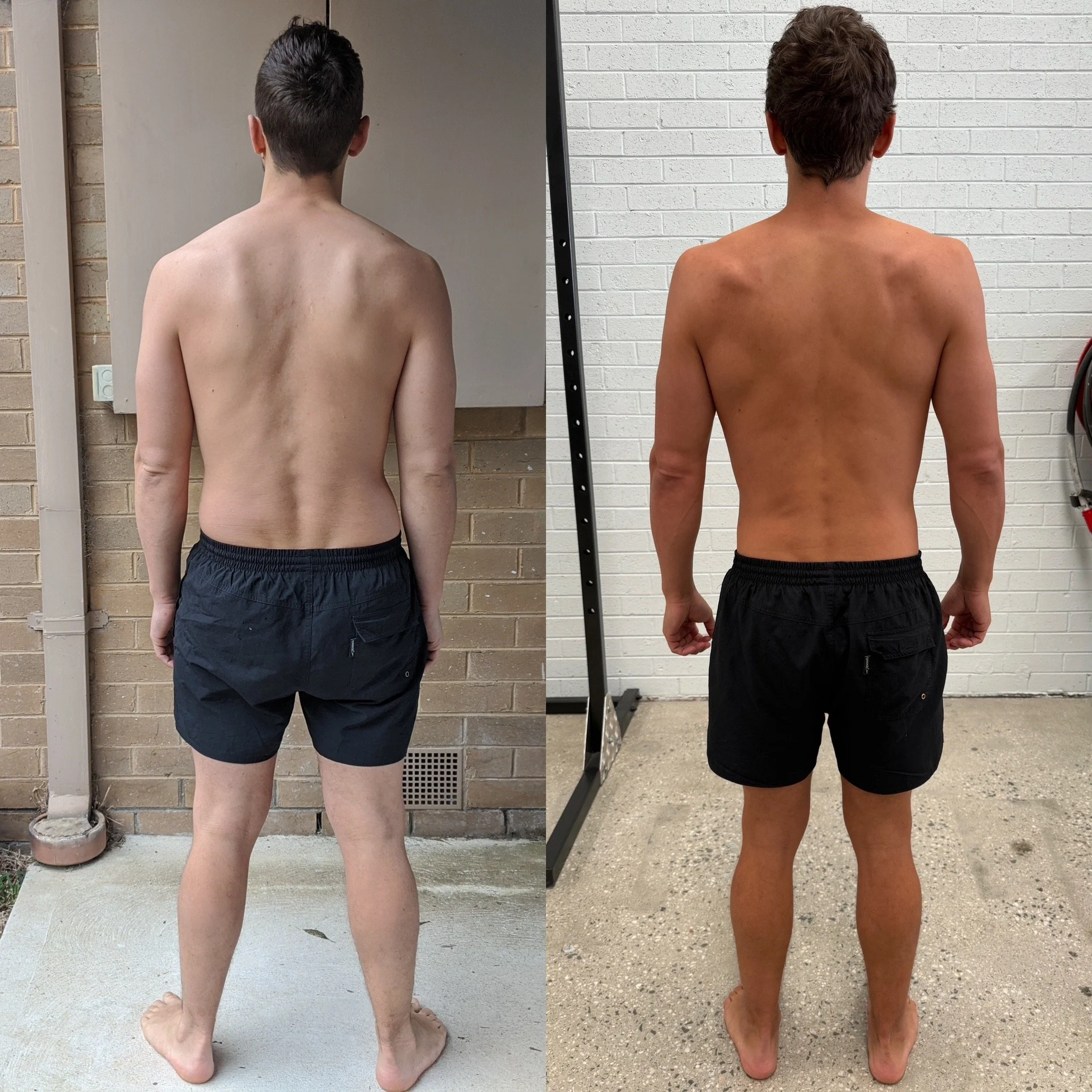
Some people also notice that one side of their upper body feels weaker or less stable, even if they’re strong overall.
Why Recognising Pain Patterns is Crucial
This is the key point most people miss. Pain beneath the shoulder blade is often not the cause — it’s the symptom.
The scapula can become the “victim” of poor mechanics elsewhere, such as:
ribcage position (flared, lifted, stiff)
thoracic spine movement restrictions
poor trunk control under load
movement strategies that overuse traps and neck muscles
strength training that builds muscle, but not function
So the goal isn’t just “get rid of the pain.” The goal is to rebuild correct scapular motion, so the body stops creating the pain in the first place.
Root Causes of Pain Beneath the Shoulder Blade
There are multiple causes of shoulder blade pain, and sometimes more than one is happening at once.
Below are the most common ones we see.
Poor Posture (But Not Just “Rounded Shoulders”)
When most people hear posture, they picture someone slumped forward.
But posture issues that lead to shoulder blade pain are often more complex, like:
ribcage flaring up and forward
thoracic spine stuck in extension or flexion
scapula sitting unstable on the ribcage
neck muscles “holding you up” all day
shoulders pulled back rigidly instead of supported dynamically
This is one reason scapular winging confuses. A winged scapula isn’t always just “weak serratus anterior” like people are told. It can be a full-body posture and movement dysfunction.
In Functional Patterns terms, the scapula often wings because the body can’t create the right relationship between:
ribs
trunk
shoulder blade
gait mechanics
So the scapula loses its stable platform.
Muscle Strain and Overuse
Sometimes the simplest answer is true: the tissues under the shoulder blade are overloaded.
Common triggers include:
too much sitting + sudden training sessions
repetitive lifting at work
too much overhead work too soon
high volume gym programs without enough recovery
doing rows, pull-ups, and presses while the scapula is already dysfunctional
A big issue here is that traditional weight training can make scapular winging worse if the scapula is not moving well to begin with.
It’s not that training is bad — it’s that training on top of dysfunction can drive pain deeper.
Sports Injuries
Sports injuries often create asymmetries that show up as shoulder blade pain later.
This can include:
old shoulder injuries
collarbone or AC joint irritation
ribcage impacts
whiplash/neck issues
repetitive one sided sport patterns
Even if the original injury is “healed,” the movement strategy that developed afterwards can stay.
That’s why sports injury rehabilitation has to address movement patterns, not just symptoms.
Nerve Compression (Important to Rule Out)
Sometimes pain beneath the shoulder blade involves nerve irritation, especially if the pain is sharp, burning, or radiating.
Potential signs include:
tingling or numbness
symptoms traveling down the arm
weakness in grip or hand control
pain linked strongly to neck movement
In these cases, it’s worth speaking with an appropriate healthcare professional for assessment.
Myofascial Release Techniques (Helpful, But Limited)
Myofascial release techniques (trigger point balls, foam rolling, and massage) can reduce discomfort temporarily. And yes — there are real therapeutic massage benefits. But if the scapula keeps sitting unstable on the ribcage, those tissues will keep tightening again. A simple way to think about it is that the body tightens what it doesn’t trust.
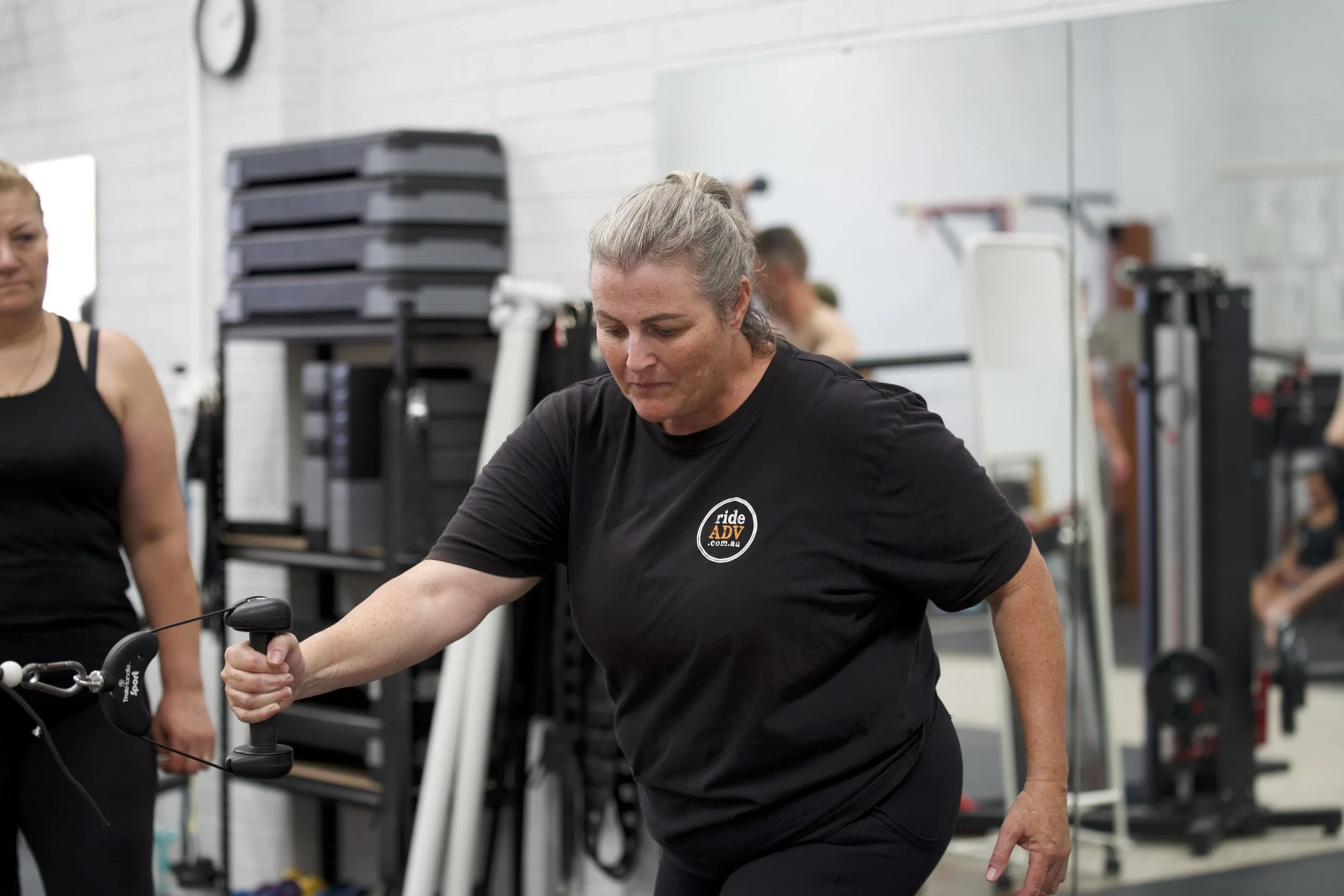
So if you don’t rebuild scapular stability, your body will keep returning to the same tension pattern.
Effective Pain Management Strategies (That Actually Last)
At Functional Patterns Melbourne, pain management strategies aren’t about avoiding movement forever.
They’re about rebuilding:
capacity
coordination
posture
and load tolerance
So you can live and train normally again.
Functional Movement Training
Functional movement training is where we see the biggest long-term changes.
Because instead of isolating one muscle, we focus on:
How the scapula moves in relation to the rest of your body
How do you generate force through the trunk
How your gait mechanics influence upper body tension
How breathing affects ribcage position
How your shoulders integrate into real movement
When these things improve, people often notice:
reduced shoulder, neck and back pain
less tightness beneath the scapula
improved shoulder strength and stability
less clicking and discomfort during training
Posture Correction Exercises
Posture correction exercises should not be endless “hold your shoulders back” drills.
That often creates more tension.
Instead, we use posture work that helps restore:
scapula positioning relative to the ribcage
trunk control and stacking
rotational mechanics
the ability to stabilise without bracing and stiffening
The goal is not perfect posture. The goal is posture you can actually maintain under load.
Injury Prevention Techniques
Injury prevention techniques are a byproduct of better movement.
When your scapula and trunk work properly, you’re less likely to overload:
traps and neck
rhomboids
thoracic spine joints
rotator cuff
the tissues beneath the shoulder blade
This becomes especially important if you’re training hard, doing sport, or working a physical job.
Ergonomic Assessment Services (Good Support, Not the Full Fix)
Ergonomics can reduce aggravation, especially if your pain is linked to:
desk work
laptop posture
long driving
repetitive reaching
But even the best ergonomic setup won’t fix the issue if your body can’t create stability dynamically.
We look at ergonomics as a support strategy, not the main solution.
Rehabilitation and Recovery
Most people don’t need to “stop everything.” They need the right plan. Recovery comes from building better mechanics progressively.
Physical Therapy Melbourne
Many people search for physical therapy Melbourne because it’s the most common pathway. And it can absolutely help, especially in acute cases. What we see often though, is that people still struggle long-term because the rehab stays too local:
stretch this
strengthen that
release this
But the scapula is a whole body joint system. So it needs a whole body solution.
Chiropractic Care Melbourne
Chiropractic care Melbourne can reduce stiffness and improve short-term comfort for some people. But again — if movement patterns don’t change, symptoms often return.
Therapeutic Massage Benefits
Massage can:
reduce pain temporarily
help you relax and breathe better
reduce guarding
improve short term range
It can be a great add-on. But it doesn’t retrain movement fundamentals, which is why many people feel they need a massage every week forever.
Sports Injury Rehabilitation (The FP Melbourne Approach)
Our sports injury rehabilitation approach is based on restoring:
postural structural integrity
scapular stability
trunk and gait mechanics
movement that transfers into sport and life
Instead of just trying to “fix the shoulder blade,” we rebuild the body so the scapula no longer has to compensate.
Holistic Health Approaches to Pain Relief
This isn’t woo woo — it’s practical. If your nervous system is fried, your body holds tension. If you sleep poorly, your tissues recover slower. If you’re stressed, your breathing changes and your ribcage mechanics shift. All of that matters.
Incorporating Mindfulness and Stress Management
Stress management strategies help because chronic stress often creates:
shallow breathing
rib flare
neck tension
scapula instability
When breathing improves, the ribcage becomes a better platform for scapular movement.
Nutrition and Lifestyle Modifications
Nutrition and lifestyle modifications won’t “cure” scapular winging.
But they absolutely support:
tissue recovery
energy levels
inflammation control
consistent training progress
Does Scapular Winging Matter?
This is one of the most common questions. Scapular winging doesn’t always mean something is “wrong.”
But if you have scapular winging and pain, weakness, or recurring shoulder issues, it often matters because it shows that:
the scapula isn’t being supported well
the ribcage and trunk aren’t doing their job
the shoulder is compensating
The goal isn’t perfect symmetry. The goal is building correct scapular motion and stability so your body stops producing pain beneath the shoulder blade.
Want Help Fixing Pain Beneath Your Shoulder Blade?
If you’re dealing with pain beneath the shoulder blade, scapular winging, or upper back pain that keeps coming back, we can help you understand what’s driving it and build a plan that actually holds.
At Functional Patterns Melbourne, we focus on:
posture and movement fundamentals
functional movement training
long-term pain management strategies
sports injury rehabilitation and injury prevention techniques
If you’d like to book a consultation, reach out, and we’ll take you through the next steps.